

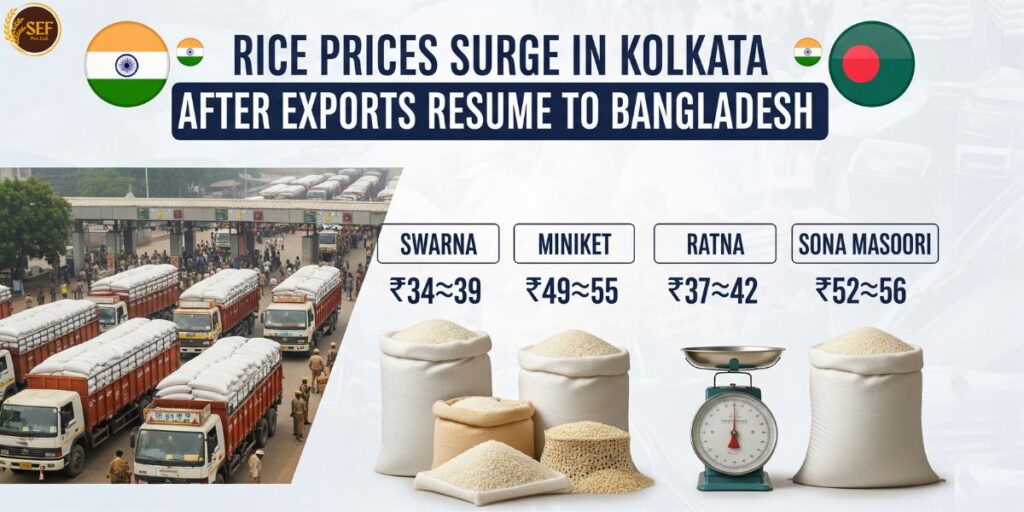
Export Ban Lift Sparks Price Rally
Rice prices in Bengal and other Indian states surged after the export ban to Bangladesh was lifted on August 12. The following day, Dhaka allowed duty-free imports of 5 lakh tonnes of rice, which triggered a wave of shipments from India.
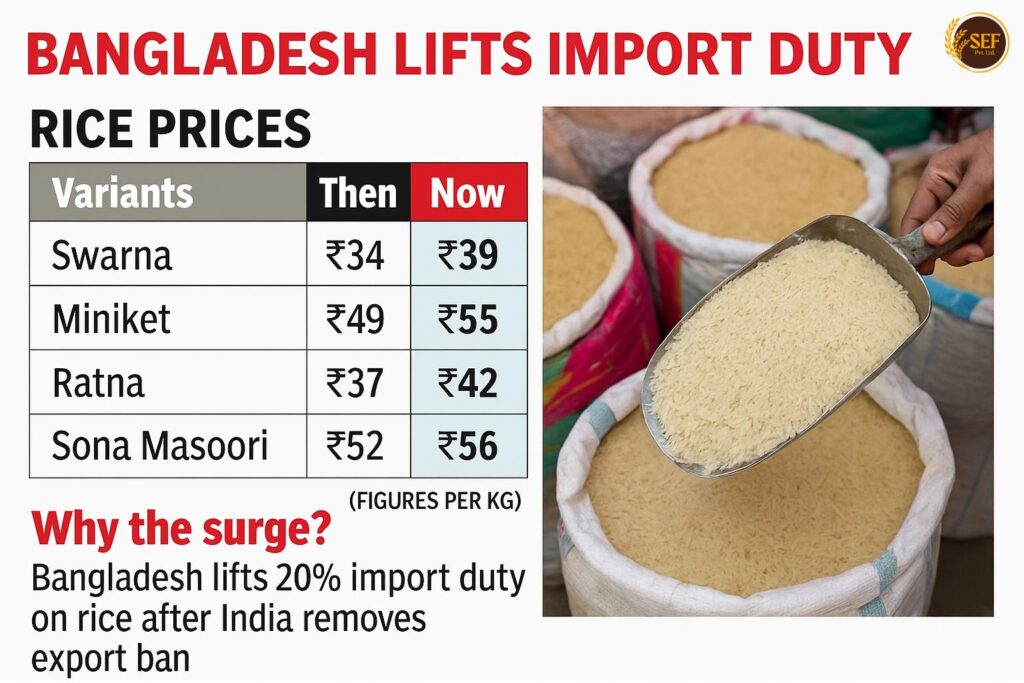
Earlier, the ban announced on April 15 had disrupted supplies. However, once duties were removed, Indian traders rushed to move stocks across the border. As a result, domestic rice prices climbed by 14–15%, with Bengal facing the steepest rise.
Also Read – Global Demand For Premium Basmati Rice Rises: Top Opportunities for Indian Exporters
Bengal Households Feel the Pinch
Consumers in Bengal were among the first to notice the change. Rice varieties saw a sharp price surge:
- Swarna: ₹34 ➝ ₹39 per kg
- Miniket: ₹49 ➝ ₹55 per kg
- Ratna: ₹36–37 ➝ ₹41–42 per kg
- Sona Masoori: ₹52 ➝ ₹56 per kg
With premium varieties becoming costlier, many households shifted to cheaper alternatives. Retailers reported a drop in demand for higher-priced rice as middle-class families adjusted their purchases.
Balancing Trade and Food Security
While exports to Bangladesh have created opportunities for traders, the impact on domestic markets is significant. Analysts warn that rising Indian rice prices may add to inflationary pressures at home.
Experts believe policymakers may need to introduce calibrated export limits or targeted subsidies if prices continue to rise. Without intervention, households could face further strain, even as regional trade remains strong.
Also Read – India-UK Trade Deal Set to Boost Agricultural Exports by 20% in 3 Years
Regional Market Outlook
Bangladesh imported 1.3 million tonnes of rice in FY25, reflecting weaker harvests and higher domestic demand. The duty waiver is expected to stabilize prices there.
In India, however, the situation is more complex. While the country remains one of the top 10 rice exporters in India, the government faces the challenge of balancing export benefits with protecting domestic food security.
Conclusion
The resumption of rice exports to Bangladesh has strengthened trade ties but placed a burden on Indian households due to higher domestic rice prices. As demand grows, the government may need to ensure stability for both exporters and consumers, striking a balance between regional trade growth and food security at home.