

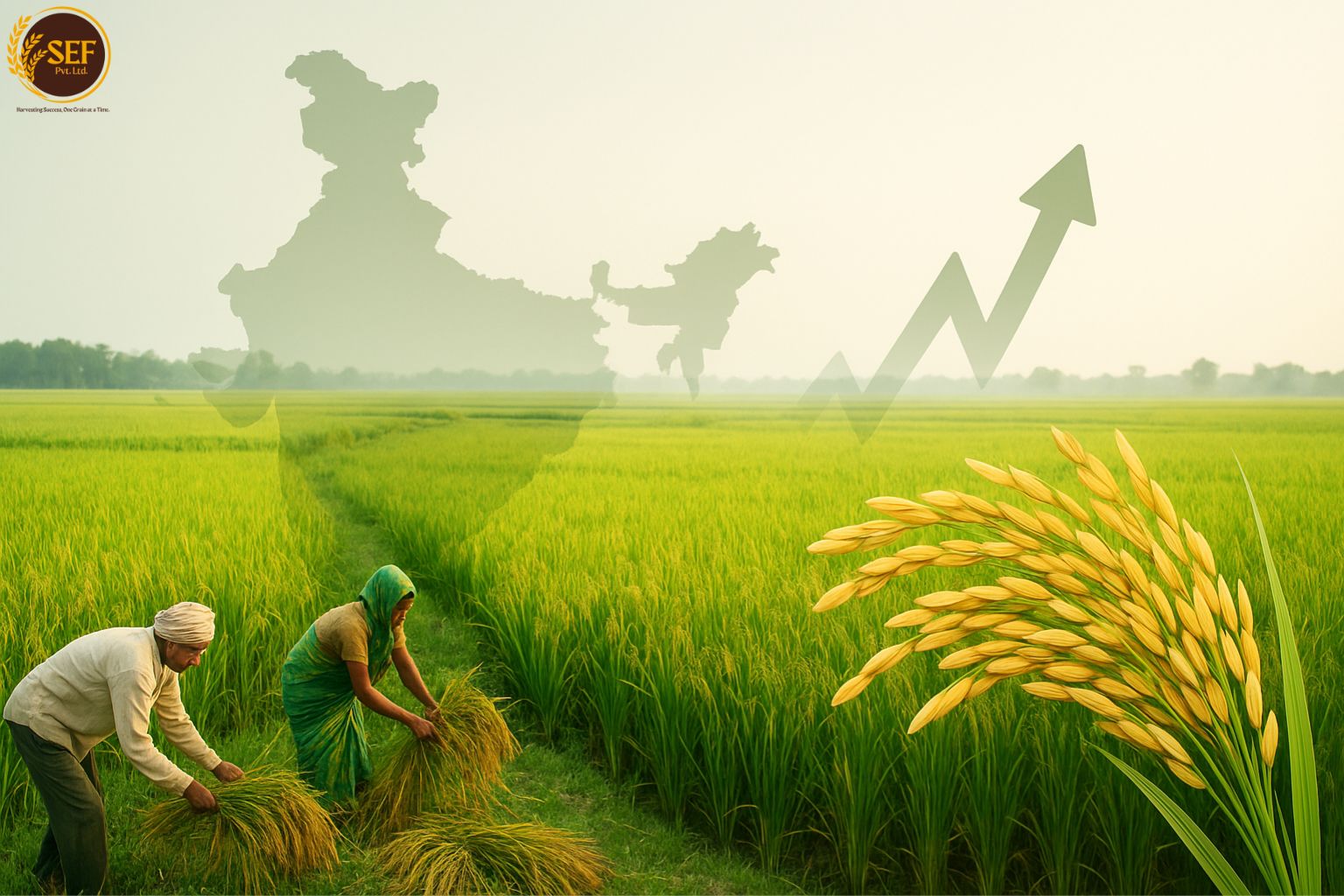
India is on track to achieve a historic milestone in agriculture, with rice production projected to reach 152 million tonnes in the 2025–26 crop year, marking the highest output ever recorded. Expanded acreage, favourable weather conditions, and a noticeable shift by farmers from cotton to paddy cultivation drive the surge.
This development strengthens India’s position in global food security while influencing rice prices in India and international trade flows.
Expanded Acreage and Weather Stability Drive Output
A key factor behind the record projection is the increase in planted area under rice. Farmers across major producing states opted for paddy due to its relatively stable returns, lower cultivation risks, and assured procurement mechanisms.
Additionally, the monsoon season remained largely supportive, with even rainfall distribution improving transplanting schedules and reducing crop stress. Improved seed varieties and better agronomic practices, especially in eastern and southern regions, further enhanced yield potential.
Together, these factors have created one of the most favourable growing environments seen in recent years.
Also Read – India Eyes $35 Billion Export Push to Russia by 2030: Experts Call for Modern Rupee–Rouble Payment System
Shift from Cotton Reflects Market Signals
The move away from cotton cultivation played a significant role in boosting rice acreage. Cotton growers faced price volatility, rising pest-control costs, and uncertain demand, prompting many to shift toward rice.
In contrast, rice offered:
- Lower input costs
- Predictable yields
- Strong minimum support price assurance
This shift highlights how farmers respond quickly to market and policy signals when choosing crops.
Policy Watch: Procurement, Stocks, and Exports
With production set to hit a record, attention is turning to government procurement strategies and stock management. High public inventories in recent years have influenced export policies, and the upcoming harvest may again shape decisions on trade restrictions or relaxations.
Any changes could directly impact:
- Domestic availability
- Rice prices in India
- Export competitiveness
Given India’s role among the top 10 rice exporter companies in the world, global buyers are closely monitoring policy signals.
Also Read – India’s Rice Procurement Rises 13% in First Two Months as Southern States Lead Growth
Global Trade Implications
As the world’s largest rice exporter, India’s bumper crop has major international implications. Import-dependent regions in Africa, the Middle East, and South Asia could benefit from additional supply if export flows increase.
Market participants note that:
- Higher export availability could ease global prices
- Continued restrictions may keep international markets firm
India’s performance will therefore remain a key reference point for global rice trade dynamics.
Domestic Demand to Absorb Part of the Supply
On the domestic front, steady household consumption and consistent demand for parboiled and broken rice are expected to absorb a portion of the additional output. However, a significantly larger harvest could place short-term pressure on mandi prices during peak arrivals if procurement volumes do not rise accordingly.
This balance between supply, procurement, and consumption will be crucial in determining near-term market stability.
Also Read – India’s Kharif 2025 Rice Output Set to Hit 124 MT, Boosting Food Security and Market Stability
Outlook
India’s strong rice outlook contrasts with mixed prospects for other crops. While wheat production is expected to improve, oilseeds may see weaker output due to reduced planting. These trends underline rice’s resilience within India’s agricultural economy.
Looking ahead, the sustainability of expanded rice acreage will depend on price trends and cost dynamics. For now, the projected record harvest reinforces India’s food security, strengthens its standing among the top 10 rice exporters in India, and sets the tone for global rice markets in the year ahead.