

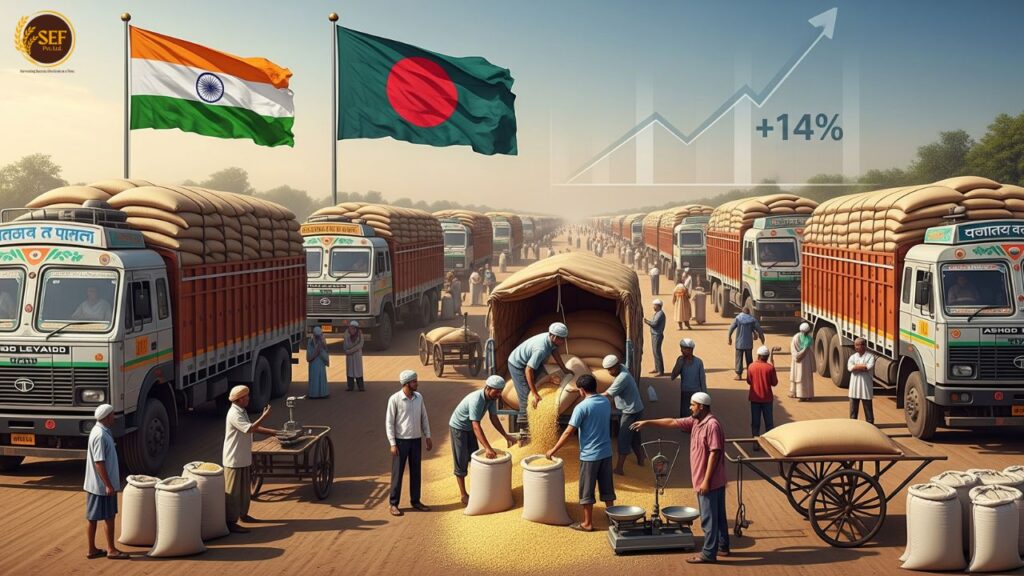
Rice prices in India have jumped sharply, rising by up to 14% within two days. The sudden spike was triggered after Bangladesh announced duty-free imports of 500,000 tonnes of rice to control its domestic market prices.
Key Developments
- Bangladesh officially removed its 20% import duty on rice this week.
- Anticipating the move, Indian traders had already stockpiled rice near the Petrapole-Benapole border, the main trade route between the two nations.
- Soon after the announcement, truckloads of rice shipments began moving into Bangladesh, tightening supplies within India.
Also Read – Global Demand For Premium Basmati Rice Rises: Top Opportunities for Indian Exporters
Impact on Indian Retail Prices
This export surge has led to immediate retail price hikes across several states, including West Bengal, Uttar Pradesh, and southern India.
- Swarna: ₹34 → ₹39 per kg
- Miniket: ₹49 → ₹55 per kg
- Ratna: ₹36–37 → ₹41–42 per kg
- Sona Masoori: ₹52 → ₹56 per kg
The sudden escalation has caused short-term retail inflation, affecting both wholesalers and consumers.
Why Did Bangladesh Act?
Bangladesh has been grappling with persistent food inflation, where rice prices rose nearly 16% in FY25. To stabilize its domestic market, the government introduced a duty-free import policy, ensuring cheaper supplies for consumers.
Also Read – India to Export 9 Lakh Tonnes of Rice to Bangladesh as Demand Surges
India’s Position in the Market
Even with this surge in exports, India’s rice stocks remain robust. Agricultural experts believe the additional shipments may:
- Help Indian farmers secure better returns.
- Offset the impact of recent global rice price declines caused by oversupply.
- Strengthen India’s role as a reliable rice exporter in the region.
Also Read – India-UK Trade Deal Set to Boost Agricultural Exports by 20% in 3 Years
Conclusion
Bangladesh’s duty-free import policy has triggered a rapid rise in rice prices in India, but strong reserves and upcoming harvests are expected to stabilize the market soon.
This development highlights how regional trade policies can directly influence India’s agricultural economy. At Shah Enterprises, we continue to analyze such shifts to provide timely insights into the global rice trade.