

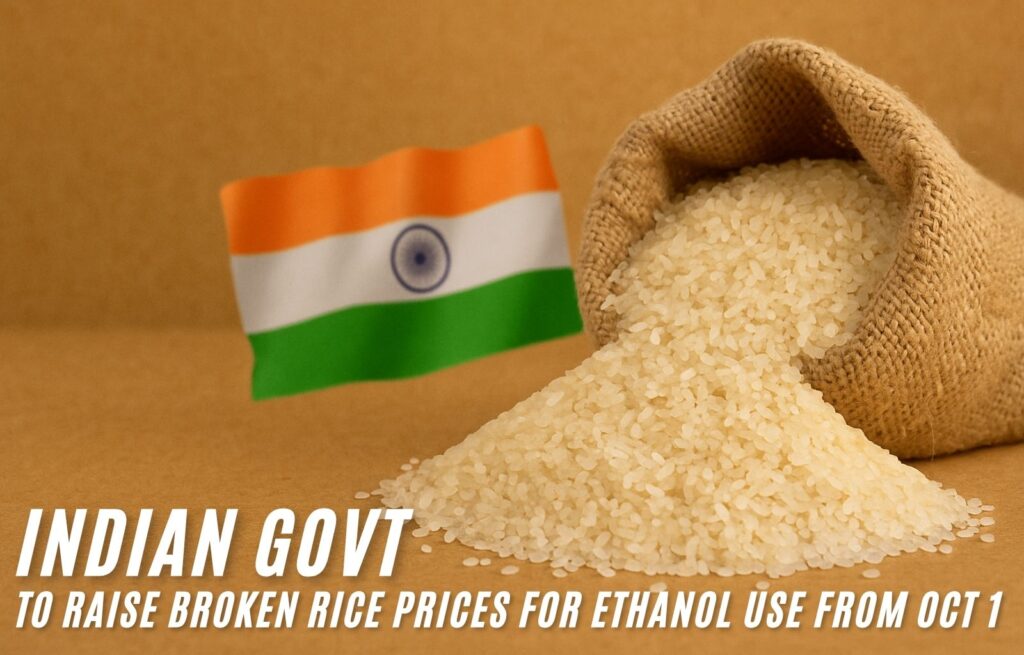
To control food inflation and streamline ethanol production, the Indian government will revise the reserve prices of wheat, rice, and broken rice under the Open Market Sale Scheme (OMSS). The new rates, including updated broken rice prices, will take effect from October 1, 2025. The goal is to improve price transparency and better manage food stock distribution.
Revised OMSS Rates for Wheat, Rice, and Coarse Grains
According to the Ministry of Finance, wheat will be sold through OMSS at ₹2,550 per quintal across all crop years, including the 2025–26 rabi marketing season. Previously, FAQ wheat was priced at ₹2,325, and URS wheat at ₹2,300.
In addition, the updated rice rates will take effect on October 1, 2025. Until then, current prices will remain in effect. The government will also add transportation costs to the reserve price for region-specific fairness.
Broken Rice for Ethanol to Become Costlier
Broken rice sold to distilleries for ethanol will cost ₹2,320 per quintal, up from ₹2,250. This change supports India’s ethanol blending program. The government has capped this category at 52 lakh tonnes.
Further, private traders and cooperatives who buy rice with 25% broken grains through e-auctions will pay ₹2,890, up from ₹2,800. Rice with 10% broken content under the rice mill transformation scheme will sell at ₹3,090. Broken rice from the same scheme will cost ₹2,320.
Bharat Rice and Direct Buyer Prices Updated
Rice sold to state governments and community kitchens will cost ₹2,320 per quintal, up from ₹2,250. A limit of 32 lakh tonnes has been set for this category.
The price for Bharat brand rice, supplied to Nafed, NCCF, and Kendriya Bhandar, will rise to ₹2,480. Starting July 1, the ₹200 per quintal subsidy from the Price Stabilisation Fund will end.
Private buyers and small traders will now pay ₹2,890 per quintal, previously ₹2,800.
Coarse Grain Prices Also Adjusted
The Committee of Secretaries (CoS) has announced new OMSS prices for coarse grains, valid until June 30, 2026:
- Bajra: ₹2,775
- Ragi: ₹4,886
- Jowar: ₹3,749
- Maize: ₹2,400
FCI Stock Levels Justify the Hike
The Food Corporation of India (FCI) has adequate grain stocks to support these price changes. As of June 1:
- Rice: 37.99 million tonnes
- Unmilled paddy: 32.25 million tonnes (equals 21.6 million tonnes of rice)
- Wheat: 36.92 million tonnes (a three-year high)
- Coarse grains: 0.46 million tonnes
Furthermore, these reserves allow OMSS sales to continue without affecting the public distribution system (PDS).
Emergency Buffer Stock Plan
The CoS recommended setting aside 20 lakh tonnes of wheat and 30 lakh tonnes of rice for emergencies. FCI will decide on the quantity and timing of OMSS releases in coordination with the Department of Food and Public Distribution. These decisions will align with existing buffer norms and PDS needs.
Conclusion
By revising OMSS prices, the government aims to stabilize foodgrain markets, support ethanol production, and ensure supply-chain efficiency. With sufficient reserves and updated pricing, India can meet both domestic and industrial demands effectively.
📞 Connect with Shah Enterprises for Basmati and Non-Basmati Rice Trade Updates
Stay informed with the latest Indian rice prices, government policies, and export trends. Additionally, Shah Enterprises can assist you with your non-basmati rice trade goals efficiently.
 Chat on WhatsApp