

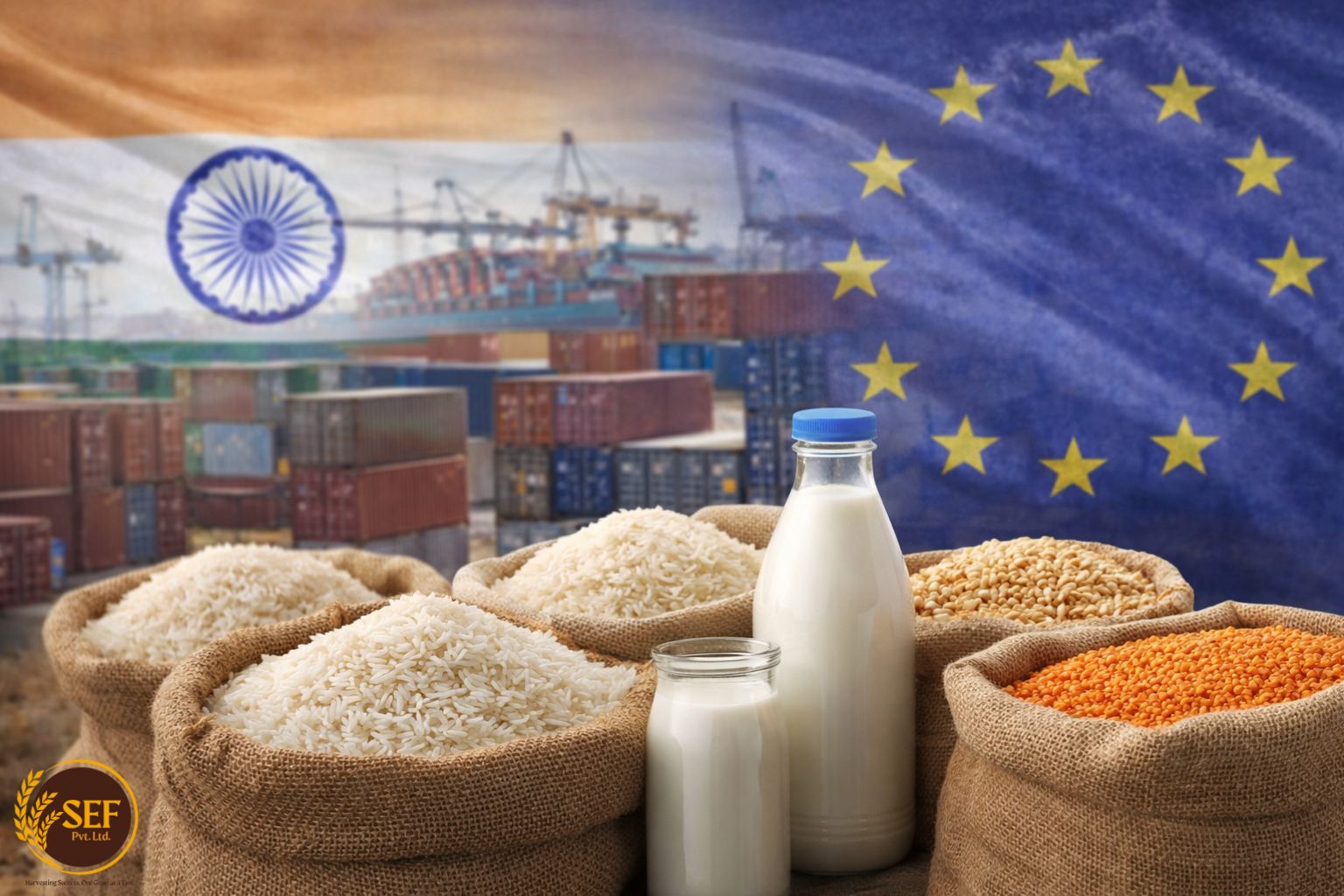
India has decided not to reduce import duties on sensitive agricultural products under the proposed Free Trade Agreement (FTA) with the European Union. The protected items include dairy, rice, wheat, pulses, tea, and coffee, according to the commerce ministry.
The decision reflects the government’s priority to safeguard the livelihoods of small and marginal farmers. Officials confirmed that India has never offered tariff concessions on dairy products in any earlier trade agreement and will continue this approach.
Farmer Interests Take Priority
Apart from dairy and staple crops, India has also excluded beef, poultry, fish, seafood, fruits, vegetables, edible oils, spices, and tobacco from tariff liberalisation. These sectors support millions of rural households and remain politically and economically sensitive.
At the same time, the EU has also protected its own vulnerable segments. The bloc has kept products such as dairy, rice, sugar, meat, and tobacco outside the agreement’s tariff commitments.
While core food items remain shielded, India will gain preferential access to nearly 87% of EU agricultural tariff lines. Products such as tea, coffee, spices, and table grapes will benefit from lower duties in European markets.
The outcome may help stabilise Indian rice prices by preventing sudden import pressure, while allowing India to expand exports in selected value-added farm categories.
India and the EU concluded negotiations this week. Both sides expect to sign and implement the agreement later this year.